Japan is a place famous for many things, and many of them also happen to dovetail together in nice ways.
- “Japan has four seasons” is a phrase that many foreigners (myself included) roll eyes at from time to time. Of course! Many places do as well around the world! But the particularly Japanese view of having four seasons is to then enjoy and rotate activities depending upon the time of year. (It’s also a filthy lie because it doesn’t include tsuyu, the bonus fifth (awful) season.)
- Because of the rotation of seasons, it means all year ’round there is different scenery to take photos of, or different colors on what becomes familiar scenery. Stark browns and slate skies in winter, a riot of blooming colors in spring, the sharp greens in summer, and the explosion of red and yellow in the autumn.
- While the pink, white and bright green of spring and the hanami and sakura season gets all the attention, the koyo ‘autumn leaves’ season in the fall is almost better in my estimation.
Luckily, despite the pandemic, I got a few chances to go out and check the fall colors as the weather got chillier and the days got shorter. Collected below are a few of the many shots from these photo days. (God bless the SD card and digital photography, I don’t know how much I would have spent on film had I picked up photography in the 1980s!)


Our first stop was a day trip out to Hakone and Lake Ashi. Unfortunately, it was both a day where plenty of other people had the same idea (making parking a nightmare) and where the colors hadn’t quite popped. Despite the calendar having turned to November, it wasn’t the prime season yet. Still a lovely drive!


Hibiya Park in the center of Tokyo is a great place to visit at all times of the year, but between the stretches of bright gold ginkgo trees lining the pathways, and a variety of colors around the pond, it was a fantastic spot to walk around, enjoy the fall weather, and take some photos. However, I made a crucial mistake this day: I only brought my 16 mm lens. Compact, but not exactly what you want for detailed shots of colored leaves.
The good news about being in Hibiya is there are a couple bigger electronics shops nearby. So I decided (in a bit of a fit of pique) to splurge and get a Christmas present for myself early: Fujifilm’s XF 55-200 mm telephoto zoom lens. Surely, I thought, this is the way to get some good detailed leaf photos.


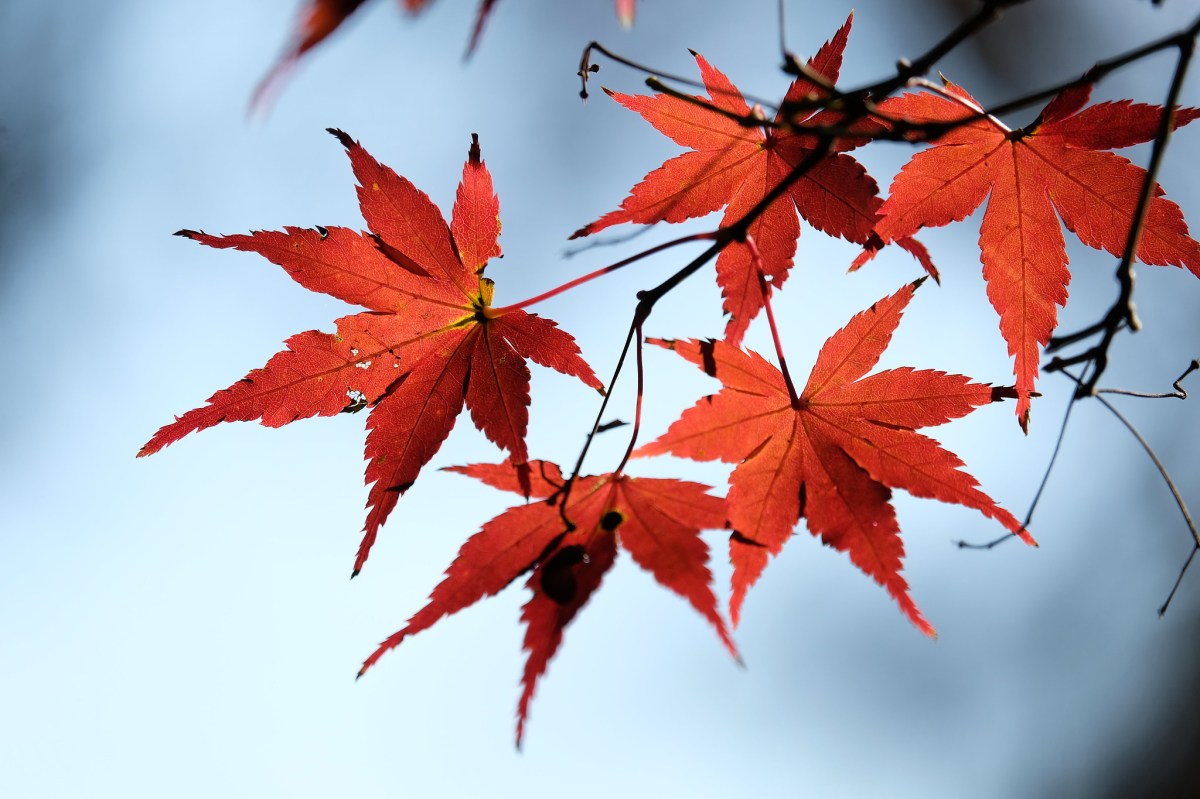
Suitably armed with some reach, my wife and I spent an afternoon in early December at Shinjuku Gyoen, not far from the shopping districts and neon signs of that part of downtown. I kept giggling to myself as I zoomed in and isolated individual leaves while throwing the background into a blur; I kept shaking my head that I’d waited so long. The 55-200 is a bit of a beer can on the smaller Fuji bodies (my wife used it with her X-A7 for a little while and that was comedically mismatched) but it handles nicely enough. I’ve seen it compared to the 18-55 2.8-4 IS and the comparisons are perfectly valid — it’s incredibly well built, has great IS, and while not Canon red-ring grade optics, it’s a great match for what the Fuji system is trying to do.
But enough about the gear — how about these fall colors.


The maple trees are to the fall season as the cherry blossoms are to the spring. But while the sakura can be a little bit of a one-trick pony, the maple leaves have some layers. Green turning to gold turning to orange and red — the layering and advancement is reminiscent of weathering. It makes for some fantastic viewing.


While we hadn’t hit peak season before at Hakone, and while I was an idiot and chose the wrong tool for the job at Hibiya Park, this afternoon spent at Shinjuku Gyoen was almost perfect. The crisp fall weather, plenty of great sites to snap photos of, and of course time spent walking with the missus. Absolutely impossible combination to beat.
 Doug Bonham Dot Blog